
Jarvis AI
Talent Solutions
Public Sector
About
Contact Us
image
Frequently Asked Questions

Everything you need to know
about the MCP Gateway

Answers to common enterprise questions about MCP discovery, governance, federation, OAuth, auth elicitation support, and observability. Can't find what you're looking for? Schedule a call.

Overview

About the MCP Gateway

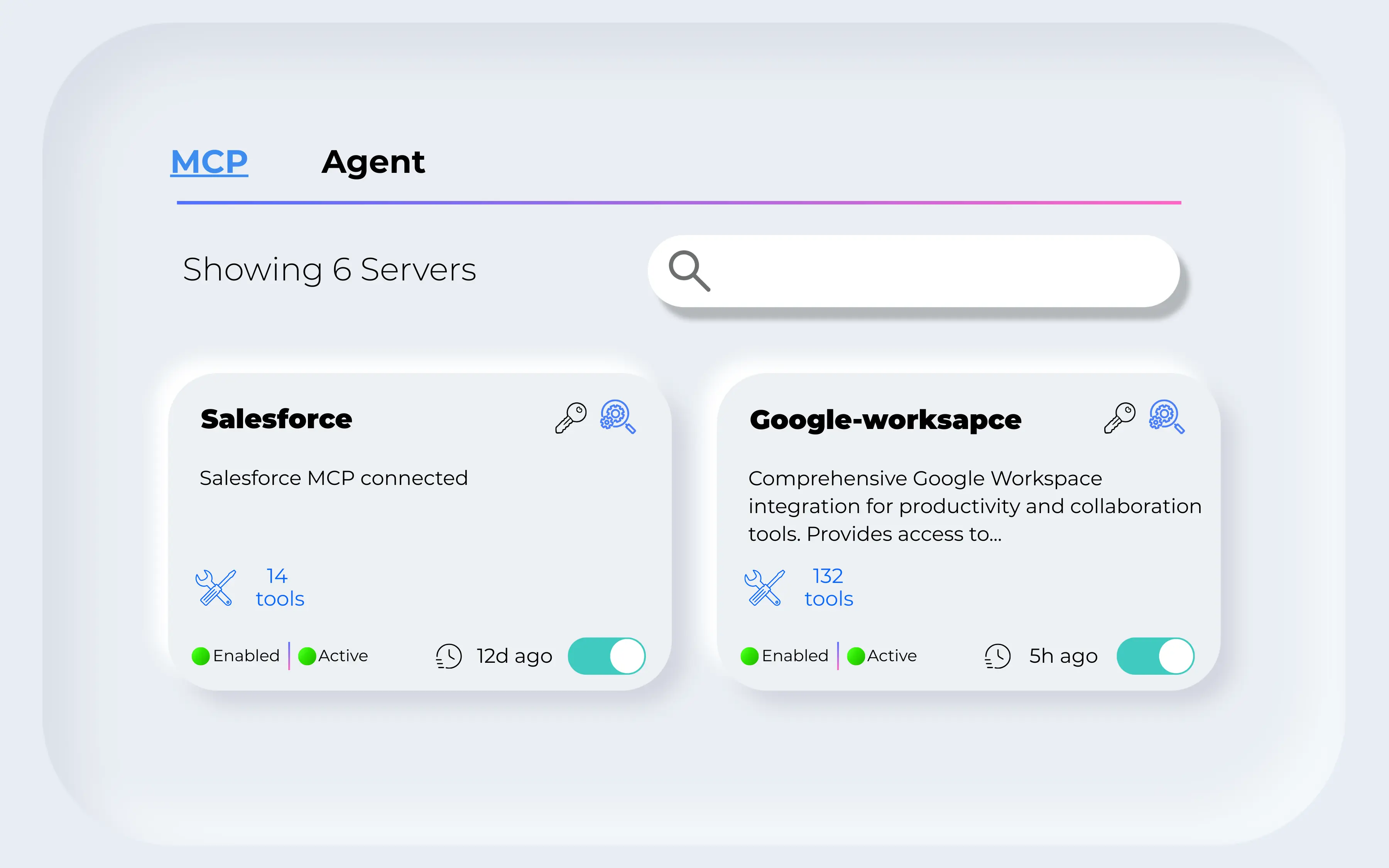
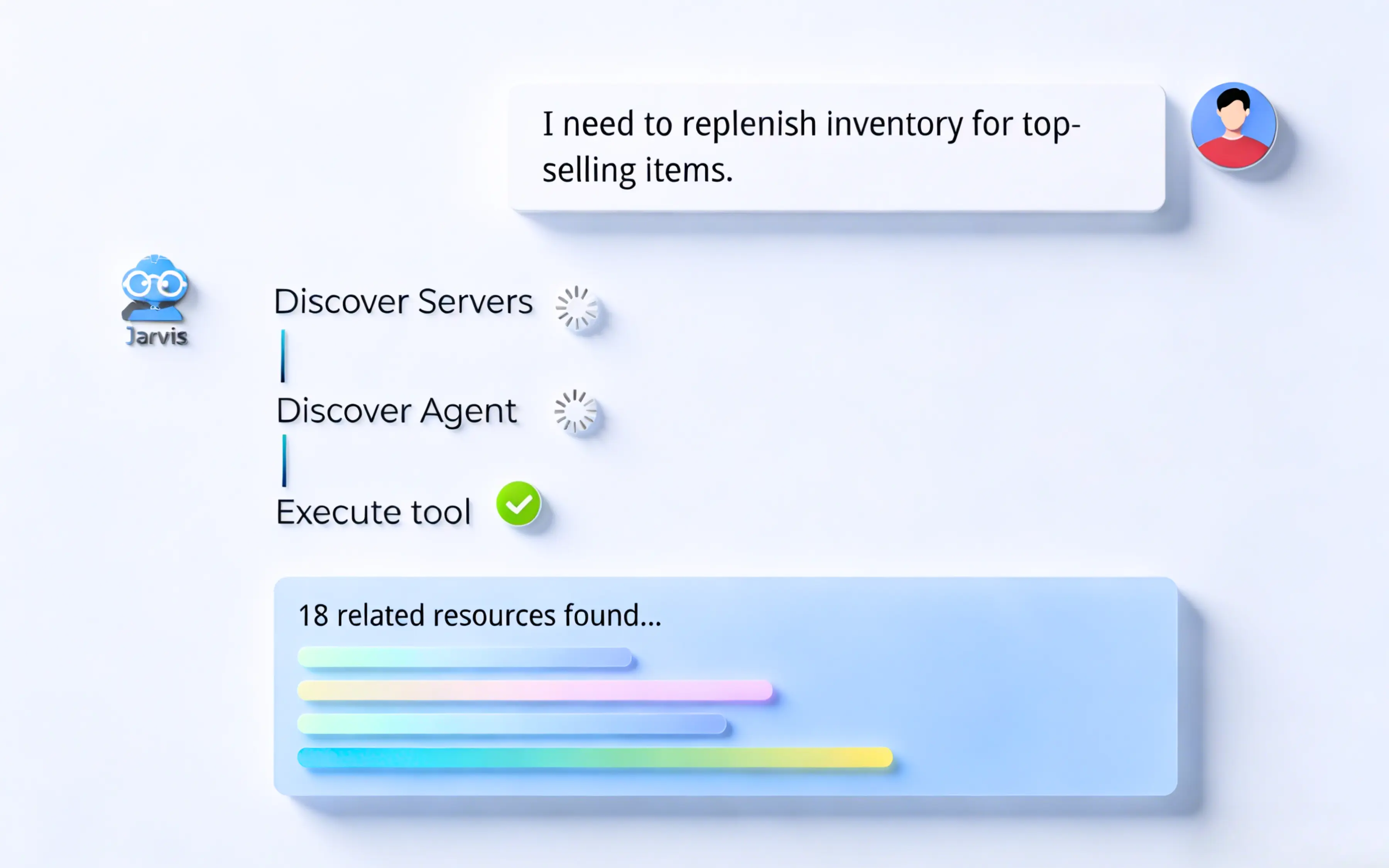
An MCP gateway is the control and enforcement layer between AI clients and MCP servers. It centralizes discovery, authentication, policy checks, routing, and auditing for every MCP tool call.

Instead of configuring each copilot directly against each MCP server, you expose one governed endpoint and enforce consistent policy for all clients.

The MCP Gateway focuses on tool, resource, and prompt invocation against MCP servers. The Agent Gateway focuses on autonomous agents and agent-to-agent orchestration.

Both are part of Jarvis Registry and share identity, policy, and observability controls, but they operate on different runtime objects and invocation models.

Federation

Multi-cloud MCP federation

No. MCP federation imports existing MCP servers from AWS AgentCore and Azure AI Foundry into the Jarvis catalog without redeployment.

Servers continue running in their source environment while Jarvis applies unified RBAC, ACL, and audit policy at the gateway layer.

Jarvis connects to each provider, discovers MCP servers and capabilities, and syncs them into one governed namespace. Each imported server is then exposed through the same gateway endpoint used by native servers.

From the client perspective, cloud origin is transparent. Discovery and invocation behavior stays consistent across self-hosted, AWS, and Azure MCP servers.

Auth & Elicitation

Authentication and auth elicitation support

Yes. Jarvis supports auth elicitation flows so MCP clients can be prompted to complete required authentication when a downstream server requires user consent or refreshed credentials.

This allows secure per-user authorization without exposing raw credentials to the client or bypassing enterprise identity policy.

Yes. The MCP Gateway validates resource indicators for token scope binding so a token intended for one MCP server cannot be replayed against another.

Jarvis enforces PKCE and standards-based OAuth behavior for inbound and outbound flows, including per-user token lifecycle controls.

Tokens and secrets are encrypted at rest and used server-side within your environment. Credentials are isolated per user and per downstream MCP server.

Silent refresh and revocation-aware handling ensure stable access while maintaining least-privilege posture and auditability.

Governance

Policy, access control, and audit

Jarvis applies RBAC and ACL policy at tool level on every invocation. Users and service identities see only the tools they are authorized to discover and invoke.

Policy decisions are enforced at runtime and captured in the audit stream for compliance review.

Yes. You can scope policy by role, group, environment, server, and individual tool actions. This supports strict separation across dev, staging, and production.

Central policy management avoids drift and keeps enforcement consistent across every connected copilot.

Operations

Observability and troubleshooting

Jarvis emits trace and audit telemetry for discovery and invocation events, including user identity context, policy decision, target server, and result status.

Telemetry is OTLP-compatible and can be forwarded to Datadog, Grafana, and other enterprise observability backends.

The most common causes are missing policy scope, expired downstream credentials, unsupported auth state, or schema mismatches between client input and tool contract.

Jarvis surfaces policy and auth failure details in logs so teams can quickly determine whether the issue is access, token state, or request format.

Still have questions?

Our team is happy to walk you through architecture, security, and pricing specific to your environment.