

Deployment boundary
Confirm whether the control plane and runtime traffic are managed, customer-hosted, hybrid, or tied to one cloud. Map every external model and tool route instead of treating customer-hosted as a blanket no-egress guarantee.
Buyer guide · Reviewed September 2026
Compare deployment, discovery, identity, policy, observability, agent support, and implementation ownership before you shortlist an enterprise MCP gateway.
Choose the control point
Start with the control problem, then compare vendors that solve that job. The official MCP Registry is a public catalog; its own documentation recommends a private registry for private servers.
| Control point | Primary job | Question it answers |
|---|---|---|
| Public MCP registry | Publishes metadata for publicly available MCP servers. | Where can developers discover public servers? |
| Private MCP registry | Catalogs the MCP servers an organization has reviewed and approved. | Which tools are approved, owned, and discoverable internally? |
| MCP gateway | Authenticates, authorizes, routes, and observes MCP tool calls at runtime. | Can this user or agent invoke this tool right now? |
| Agent registry | Tracks agent ownership, capabilities, versions, approvals, and lifecycle. | Which agents can teams trust and which version is current? |
| Agent gateway | Applies policy and routing to agent-to-agent calls across runtimes. | How should one agent discover and invoke another? |
| Existing API gateway | Continues to govern application APIs and non-MCP traffic. | Which existing controls can we keep, and what MCP-specific layer is missing? |
Reference: official MCP Registry documentation.
Evaluation checklist
Confirm whether the control plane and runtime traffic are managed, customer-hosted, hybrid, or tied to one cloud. Map every external model and tool route instead of treating customer-hosted as a blanket no-egress guarantee.
Check how servers, tools, agents, owners, versions, and approval status enter the catalog and how quickly a change reaches users.
Test SSO or OIDC integration, user and workload identity, role-based policy, and tool-level permissions with a real restricted user.
Verify where policy is evaluated, how credentials are handled, what happens when access is revoked, and whether unapproved servers can be blocked.
Separate MCP tool calls from agent-to-agent calls. A product may govern one without providing registry, lifecycle, or routing controls for the other.
Require a trace from the initiating identity through gateway decisions and downstream calls, with export to the monitoring tools your team already uses.
Ask how teams approve, version, deprecate, roll back, and retire servers and agents without leaving stale access paths behind.
Price the work around the software: architecture, identity integration, migration, policy design, operations, upgrades, and incident support.
Starting shortlist
This is a scope comparison, not a ranking. Product availability changes quickly, so use the linked first-party pages to confirm current features, editions, and deployment terms during procurement.
Customer-hosted MCP and agent governance, with registry, gateway, lifecycle, and implementation support across AWS and Azure environments.
AWS-managed gateway and registry services for discovering and governing agents, tools, and resources in an AWS-centered architecture.
Azure services for MCP server inventory and governance of MCP tool access through the Microsoft Foundry ecosystem.
MCP discovery and governance integrated with Kong's broader API and AI gateway platform.
An open-source enterprise AI control plane and MCP gateway offered for self-hosted or managed use.
MCP gateway capabilities within a broader AI platform, with publicly documented VPC, on-premises, air-gapped, and multi-cloud deployment options.
Where Jarvis fits
You only need a public server catalog, a local single-developer proxy, or a gateway that is already bundled into a platform your organization has standardized on.
For any customer-hosted option, document the actual route to external model and tool providers. Hosting location alone does not prove that every request stays inside one account.
Build or buy
A working MCP router is only one part of a production control plane. A build decision also assigns long-term ownership for identity federation, credential lifecycle, policy evaluation, catalog curation, audit retention, telemetry, upgrades, and incident response.
Consider an internal build when a platform team owns a limited set of services, has capacity to maintain the control plane, and can prove every security and audit requirement.
Evaluate a product when multiple teams, identity domains, environments, or compliance requirements make the surrounding governance work larger than the routing layer.
Product proof
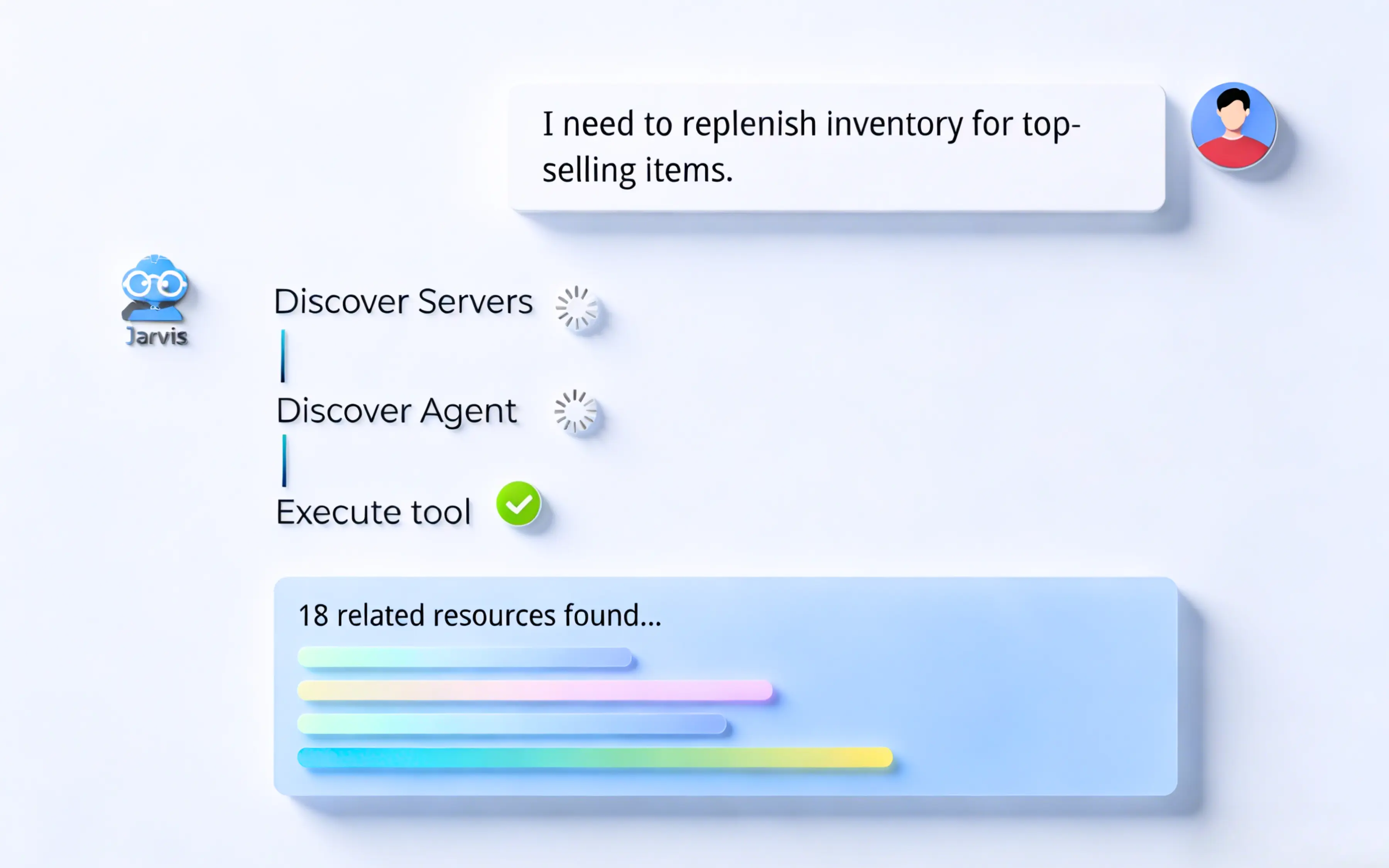
Jarvis Registry brings approved MCP servers and agents into one catalog so clients can discover the capabilities their identity is allowed to use.
Explore Jarvis Registry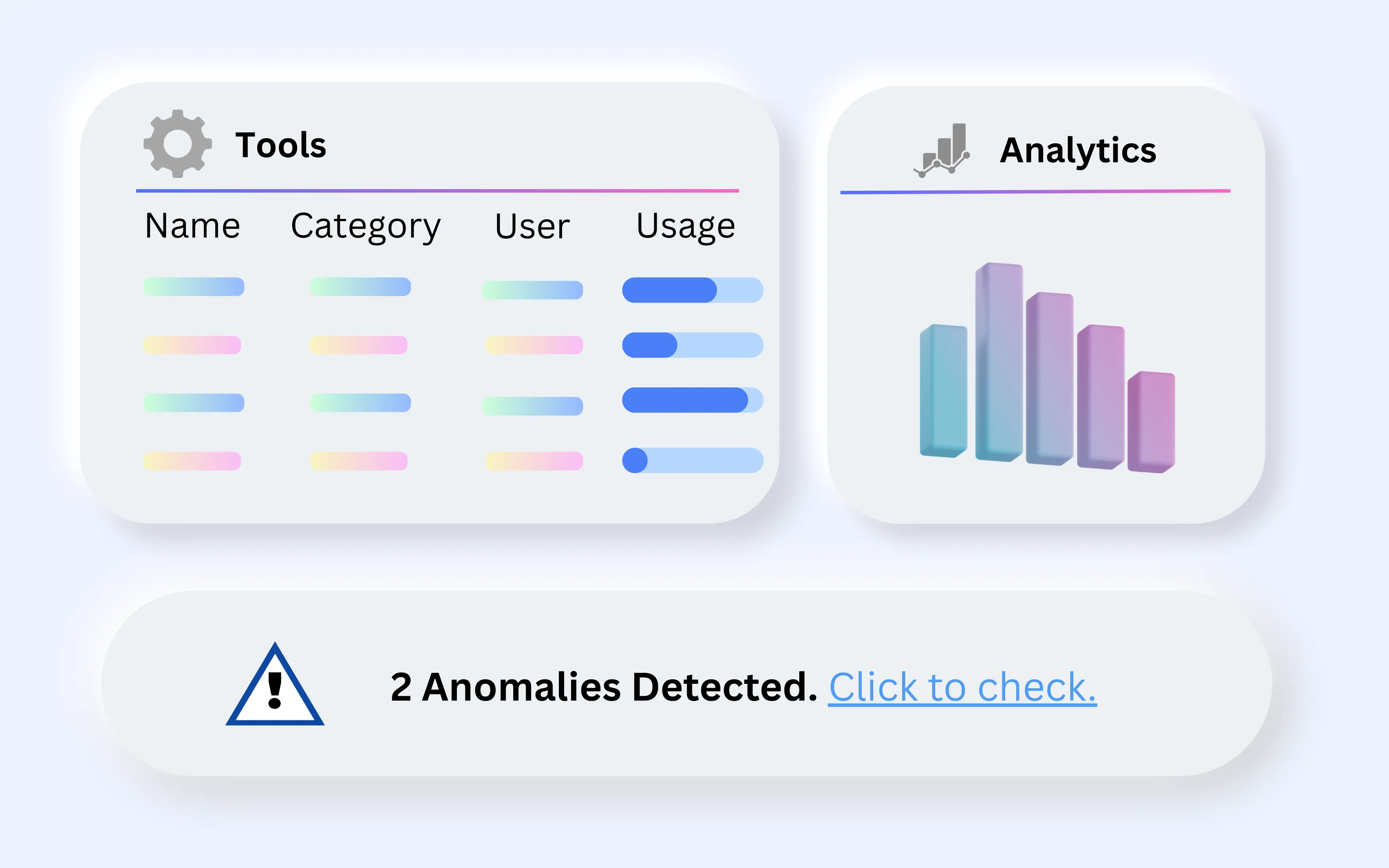
The MCP Gateway page shows how Jarvis applies access policy and records the identity, tool, decision, and downstream activity for review.
Review MCP Gateway controlsQuestions buyers ask
An MCP registry catalogs servers and their metadata so approved capabilities can be discovered. An MCP gateway sits in the runtime path to authenticate, authorize, route, and observe tool calls. An enterprise program may use both.
Keep the API gateway for application API traffic. Then test whether it can also handle MCP discovery, client and workload identity, per-tool authorization, credential flows, protocol changes, and tool-call traces. A dedicated MCP layer is useful when those jobs would otherwise become custom extensions.
Building can fit a small, stable internal scope when a platform team can own identity, policy, credential lifecycle, telemetry, upgrades, and incident response. Buying is usually easier to justify when the gateway is shared across teams, environments, or regulated workflows.
Verify where the control plane runs, where runtime traffic flows, which external model and tool providers receive requests, how identity and secrets are handled, what audit data is retained, and who owns upgrades and support. Customer-hosted software does not by itself prove that every configured request stays inside one account.
Plan the evaluation
We will map the control points you need and identify where Jarvis is, or is not, a fit.