

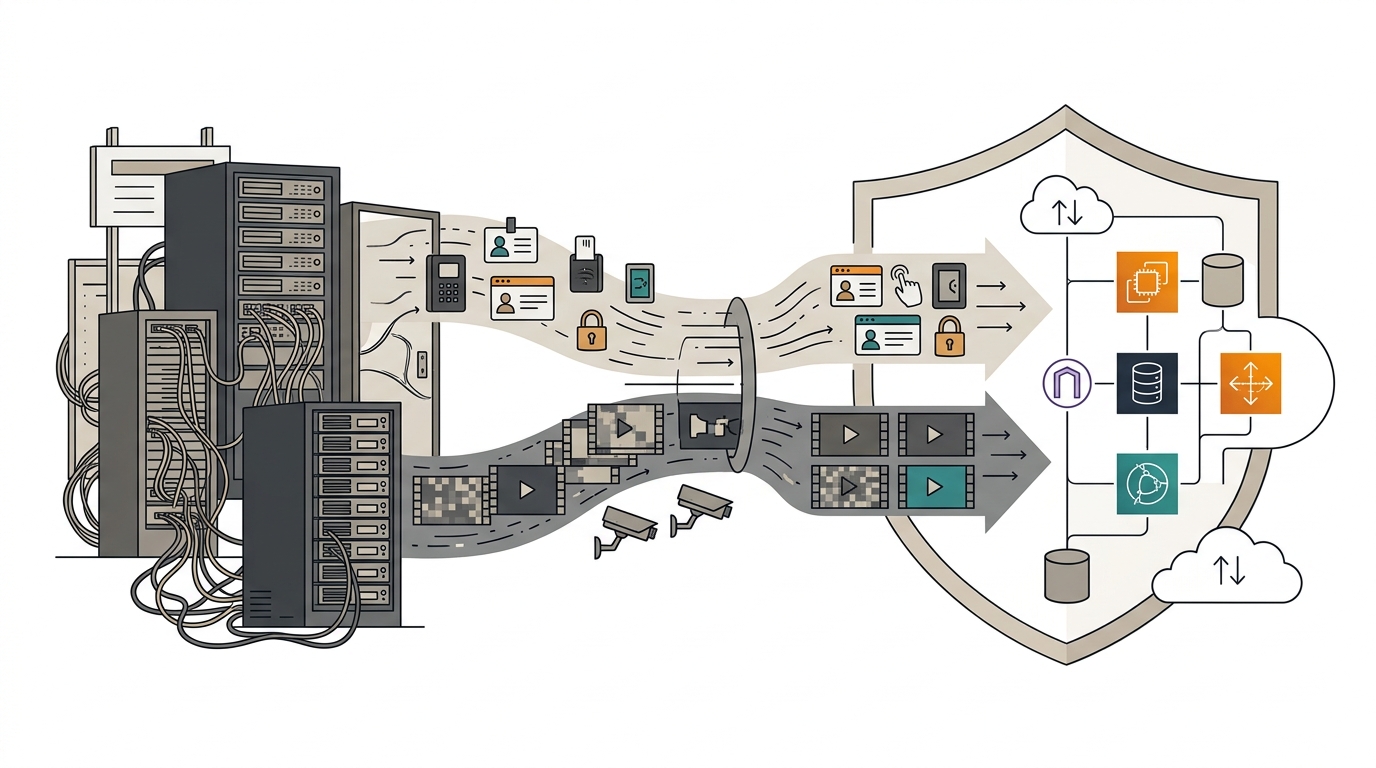
Datawatch Systems is a security systems provider whose digital operations include badge scanning, access control, and surveillance. After more than 15 years operating its own data center, Datawatch needed to move critical infrastructure from Rackspace without interrupting services people depend on every day. ASCENDING completed Datawatch's AWS infrastructure migration with zero downtime by establishing a governed cloud foundation, validating the proof of concept, and moving workloads into production through lift-and-shift and targeted modernization.
BackgroundSecurity Operations Moving from Rackspace to AWS
Datawatch Systems is a provider of integrated security technologies, including badge scanning, access control, and digital surveillance. These systems are part of the operational fabric of the sites and organizations Datawatch serves: they help manage who can enter, support monitoring, and keep important security workflows available. The company had operated its own data center for more than 15 years, and its existing Rackspace environment had become the foundation for a broad set of digital services.
The goal was broader than relocating servers: preserve continuity while creating an AWS foundation that can scale with the business. This Rackspace to AWS migration joined production provisioning, video transition, and future-state architecture with landing-zone design, security, compliance planning, and governance.
The SOW listed 10 high-level requirements and 17 named deliverables across 7 areas, from discovery and business case through security, landing-zone configuration, migration planning, testing, and training. Delivery moved through 6 milestones, with a 5-business-day review period for submitted work. Datawatch, ASCENDING, and its software vendor coordinated the work, resolved installation issues, and validated readiness.
The ChallengeProtecting Critical Security Services During Migration
The AWS infrastructure migration is a continuity-critical move from Rackspace while Datawatch's security systems remain central to daily operations. Security systems modernization had to protect 3 connected capabilities—badge scanning, access control, and surveillance—through installation, testing, and live video transition.
- Keep critical services available. Datawatch needed the move completed with no downtime, despite changing the underlying infrastructure for multiple production systems.
- Address legacy application constraints. After 15+ years in a company-operated data center, some applications could not be treated as interchangeable cloud workloads. The migration needed both lift-and-shift and modernization, choosing an approach that fit each system instead of imposing a single pattern.
- Make server provisioning repeatable. Production needed 3 server roles. The SOW called for automated provisioning and documentation so future capacity needs would not depend on one-off setup.
- Transition video in stages. The plan included enabling a dual video feed between Rackspace and AWS, accumulating the first 30 days of video in AWS, and importing archives older than 30 days. This required a deliberate transition path for both new footage and historical records.
- Make operations understandable. Datawatch needed clear documentation for operator access, routine provisioning, and production traffic flows so teams could understand how the environment worked after handoff.
The SOW also called for a shared security model, an AWS security-model review, identity and access management, a testing strategy, and software installation support. It did not specify a regulatory certification; the focus was on defining security responsibilities and preparing a governed environment for Datawatch's production systems.
Why ASCENDINGAWS Migration Experience and Delivery Ownership
ASCENDING is an AWS Advanced Tier Services Partner responsible for cloud architecture and delivery. Datawatch's project combined AWS migration, landing-zone configuration, security and compliance planning, governance, production provisioning, and handoff. That mix called for architecture and operating controls to be considered before production rollout, rather than treating the infrastructure move as a server relocation alone.
The SOW set 6 milestones, from kickoff and a RACI matrix through planning, operational setup, migration and testing, training, and acceptance. Datawatch, ASCENDING, and the software vendor shared responsibilities and review points as the work advanced toward production.
ASCENDING aligned migration waves, production installation, and testing, then continued supporting Datawatch through AWS Enterprise Partner-Led Support. The program provides the same AWS Enterprise Support plan at 30% off its published retail rate, with a designated TAM and 24x7 support-engineer coverage. For business-critical cases, response commitments include under 15 minutes; hands-on remediation is available when Datawatch explicitly authorizes the work and scopes the accounts and actions.
The SolutionPhased AWS Infrastructure Migration and Operational Handoff
The solution is a governed AWS foundation followed by POC review, workload migration, and production validation. ASCENDING paired 2 migration approaches, lift-and-shift and modernization, according to legacy application needs, preparing Datawatch's environment to support growth.
- Build the governed AWS foundation. ASCENDING evaluated Datawatch's landing zone and planned the architecture, access controls, operating model, and cost-management approach. Security and compliance planning included a shared security model and review of AWS security responsibilities, establishing governance before production rollout.
- Validate the approach before migration. ASCENDING reviewed the existing proof of concept with Datawatch, then aligned migration waves, testing, right-sizing, and data-transfer planning. This gave stakeholders a chance to assess the proposed direction and business priorities before moving production workloads.
- Prepare and validate production. The SOW called for repeatable server provisioning and managed access. ASCENDING launched the production fleet, coordinated software installation with Datawatch's vendor, resolved AWS infrastructure issues, and supported verification and testing. AWS CloudFormation was identified for automated provisioning, supporting a more repeatable operational handoff.
- Transition video and hand over operations. The video surveillance cloud migration included 2 feeds between Rackspace and AWS, accumulation of the first 30 days of incoming footage, and import of archives older than 30 days. ASCENDING also prepared provisioning guidance and a production environment diagram so Datawatch could understand routine operations after cutover.
The 2 handoff guides and production diagram emphasized repeatable operations and clear ownership rather than leaving Datawatch with an undocumented cloud environment. Managed server access was part of the plan through AWS Systems Manager Session Manager, and ASCENDING continues to support the environment as Datawatch's MSP.
The OutcomeZero-Downtime AWS Operations with Ongoing Support
The outcome is a completed AWS migration with zero downtime, a defined cloud foundation, and ongoing managed support from ASCENDING. Datawatch now runs its digital infrastructure in scalable AWS, replacing dependence on the data center it operated for 15+ years. Landing-zone setup and security planning now connect to production operations and continued growth.
- Continuity through migration: Datawatch reports that the infrastructure move was completed with 0 downtime, protecting the availability of critical badge scanning, access control, surveillance, and supporting systems.
- A repeatable production path: CloudFormation-based provisioning plans and documentation for 3 server roles gave the client a foundation for repeatable server setup and operational handoff.
- A staged video transition: The 2-feed migration plan addressed the first 30 days of incoming video and historical archives older than 30 days, rather than treating video as an incidental file transfer.
- A more scalable operating model: AWS gives Datawatch an environment it can scale as business needs change. The project emphasized cost-efficient operations, though the SOW and supplied project details do not state a quantified savings figure.
- Support beyond cutover: Through Partner-Led Support, Datawatch receives the AWS Enterprise Support plan at 30% off the published retail rate, plus a designated TAM and 24x7 engineer coverage. The discount applies to Enterprise Support, not total AWS consumption. For business-critical cases, ASCENDING provides hands-on-keyboard remediation under the same response commitments, with Datawatch's explicit authorization for scoped accounts and actions.
AWS Cloud Infrastructure and Automated Provisioning
Frequently Asked Questions
How did Datawatch Systems move its infrastructure from Rackspace to AWS?
ASCENDING combined 2 migration approaches—lift-and-shift and modernization—around Datawatch's legacy applications and business needs. The SOW's 10 high-level requirements placed landing-zone and governance planning before POC review and production validation.
Did Datawatch experience downtime during the migration?
No downtime was reported for the completed migration. The project plan included production preparation, software installation support, and verification so the transition could protect critical security operations.
How did the project prepare AWS for production operations?
The SOW covered 3 production server roles and 2 forms of operational enablement: repeatable provisioning and managed access. ASCENDING prepared the production environment, supported software installation, and assisted with testing. AWS CloudFormation was identified for provisioning, and AWS Systems Manager Session Manager for managed access.
What did the AWS landing-zone and security planning cover?
The work covered future-state architecture, networking, identity and access, cloud operations, and cost management. Security planning included a shared security model and a review of AWS security responsibilities. The supplied scope did not specify a regulatory certification.
How were Datawatch's video feeds and archives moved to AWS?
The plan covered 2 feeds between Rackspace and AWS, the first 30 days of incoming video, and import of archives older than 30 days. This staged video surveillance cloud migration addressed both new footage and existing records.
What did the project include beyond moving servers?
The SOW included 10 high-level requirements and 17 deliverables grouped into 7 areas. They covered planning and governance, landing-zone setup, migration-wave planning, production launch, testing, documentation, and training, connecting cloud readiness to the client's ability to operate the environment after launch.
Does ASCENDING continue to support Datawatch after migration?
Yes. ASCENDING continues to support Datawatch through AWS Enterprise Partner-Led Support. The program discounts the published AWS Enterprise Support rate by 30%, includes a designated TAM and 24x7 engineer coverage, and provides under-15-minute response commitments for business-critical cases. Hands-on remediation is performed only with Datawatch's explicit authorization for the approved accounts and actions. The 30% discount applies to Enterprise Support charges, not the full AWS bill.